
How to write a restaurant business plan

Writing a restaurant business plan can feel daunting. If you're at the point of taking the plunge, chances are you've dreamed of opening your own place for years. Now you need to turn that dream into something concrete: a document that forces you to answer hard questions, pressure-test your assumptions, and map the path from idea to opening day.
At Flipdish, we work with thousands of restaurant owners in over 15 countries. This step-by-step guide draws on what we've learned working alongside them. It covers everything from what a restaurant business plan should include, to how to structure your financials, build your marketing strategy, and present your plan to investors.
What is in a restaurant business plan?
A restaurant business plan covers everything from identifying the opportunity to the day-to-day running of the business. It states your goals and outlines the steps you need to take to achieve them.
A strong plan begins with an executive summary and ends with a conclusion. In between, it covers your unique proposition, target market, competitor analysis, marketing strategy, sales forecast, operations, staffing, and funding. Think of it as a document that makes the case to investors, lenders, and yourself that your restaurant is a viable business worth backing.
Where to find a restaurant business plan template
While this guide gives you practical step-by-step advice, it helps to have a template to work from. We've prepared a downloadable PDF you can use to get your first ideas on paper.
One tip: if your default is to type everything up at a computer, consider going old school with pen and paper for your first draft. Handwriting engages the brain differently and can unlock ideas that typing doesn't. It's also worth connecting with enterprise or entrepreneur support services in your area. Most regions have mentorship programmes, funding opportunities, and grant schemes for new food businesses that are well worth knowing about before you start spending money.
Step 1: write your executive summary last
It sounds counterintuitive, but write your executive summary after you've completed everything else. You'll start drafting with a particular idea in mind, but research and planning will often reshape it. Don't spend time perfecting a summary that may need to be rewritten by the time your first draft is done.
The executive summary lays out the fundamentals: the name and location of your restaurant, your offering, your unique selling point, your target customer, and your projected revenue. Keep it to one or two pages. The word summary is doing a lot of work here.
Step 2: define the opportunity and back it up with data

You might start with a hunch, an instinct that there's a gap in the market somewhere. But hunches need to be developed into opportunities, and opportunities need to be supported by data.
Say you spot a lack of good lunch options in a rapidly growing commercial district. You need to develop that hunch with research. The two key questions to answer are: what is the demand, and what is the viable way to meet it?
Your research might reveal that two large corporate offices are moving into the area, or the opposite. Visit the area at different times and observe footfall. Speak to businesses nearby. Conduct surveys. The more you can quantify the demand before you commit, the more convincing your plan will be and the less risk you carry going in.
Step 3: identify your strengths and weaknesses with a SWOT analysis
The SWOT analysis is a straightforward method for identifying your Strengths, Weaknesses, Opportunities, and Threats. It considers both internal factors (things within your control) and external ones (market conditions, competition, regulation).
Strengths are your competitive advantages. For a lunch spot in a commercial district, these might include a prime location already secured, established relationships with local food producers, or a strong health food proposition with no local competitor.
Weaknesses are the honest vulnerabilities. Low margins on fresh produce, limited pricing flexibility, no existing brand recognition, or no online ordering capability are all realistic examples. If you struggle to see your own weaknesses clearly, ask a mentor or trusted advisor. You need to find them before your competitors do.
Opportunities are external conditions you can take advantage of. An online ordering system ready to go from day one, growing consumer interest in vegan and plant-based food, or two financial services firms relocating nearby are all genuine opportunities worth documenting.
Threats are the risks that could undermine you. Rising rents, a competitor moving into an empty lot nearby, or a continuing shift towards remote working reducing your lunchtime footfall are all worth acknowledging and planning around in advance.
Step 4: analyse the external environment with PESTLE

PESTLE stands for Political, Economic, Social, Technological, Environmental, and Legal. It's a framework for examining how the broader context could affect your restaurant over the next 12 to 24 months. It requires research, but a lot of it is connecting common sense with general knowledge and applying it to your specific situation.
Political. Is the current political environment in your country or state supportive of small food businesses? Are there stimulus programmes, grants, or tax incentives for new restaurants? Are there upcoming policy changes around business rates, minimum wage, or import tariffs on food?
Economic. What is the current rate of food inflation in your area? Are there staffing shortages affecting the hospitality sector? What is consumer confidence like, and how are rising energy costs affecting food businesses similar to yours?
Social. What are the dominant food trends right now, and which are likely to last? How have consumer habits around dining out, delivery, and takeaway shifted? Is there a strong culture of supporting independent local businesses in your target area?
Technological. What ordering technology will you use? Online ordering, QR code table ordering, and self-service kiosks are all worth considering. What POS system will you integrate with, and how will you use data from your ordering system to personalise marketing and drive repeat orders?
Environmental. What is your approach to sustainability and waste reduction? Are there regulatory requirements around packaging, food waste disposal, or carbon emissions that apply to food businesses in your area?
Legal. What food safety standards apply in your country or state? What are the current labour laws and how will they affect your staffing model? What licences do you need to operate? Your local restaurant association can advise on many of these and is well worth connecting with early in the process.
Step 5: build your restaurant marketing plan
You've laid the groundwork. Now it's time to think about how you'll present your restaurant to the world.
Define your brand values and vision
Start with the fundamentals. What sets your restaurant apart? What do you believe in? What values will your restaurant stand for? Use these to write a vision statement that will guide you for the next three to five years.
A sample vision statement for a wholefood lunch spot: "At Kiwi + Lime, we source all ingredients within 100km of the restaurant and are proud to nourish the neighbourhood with fresh and flavourful wholefoods."
It may be one or two sentences, but they are some of the most important sentences you'll write for your business. If brand writing isn't your strength, consider engaging a marketing agency to workshop it with you. Simplicity, done well, is genuinely hard to achieve.
Define your target market
Summarise the scope and total size of the market you're targeting. Identify your likely customer profiles: who they are, what they want, how they make purchasing decisions, and what they're prepared to spend. Show evidence of market research and highlight any niches you identified during your research.
Refine your product offering
Draft an overview of the products and services you'll offer. What need does each one meet? Why will customers choose it? What are the benefits? Keep asking these questions as you add new menu items or change suppliers. Don't just know what you're offering. Know why.
Conduct competitor analysis
To communicate your USP clearly, you need to know your competitors well. Who are they? What are they offering? Where are they strong and where do they fall short?
Look beyond bricks and mortar. Ghost kitchens and dark kitchens have grown significantly as a competitive force, and third-party delivery aggregators increasingly operate their own food brands. Research your online competition as rigorously as your physical competitors.
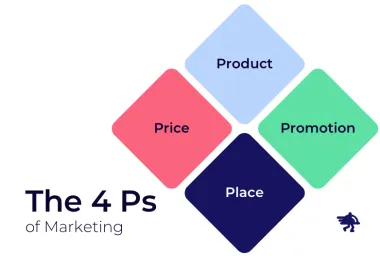
Apply the four Ps, which are Product, Place, Price, and Promotion, to both your own business and your key competitors. The gaps between your offering and theirs are where your competitive edge lives.
Set up your restaurant website and online ordering
Once you know your target market, you need a website that serves them. Key decisions at this stage include whether you'll offer online ordering from launch, whether you'll use QR code table ordering or self-service kiosks, whether you'll build a mobile app, and how your loyalty programme will drive repeat orders.
These are core to what Flipdish does. We help restaurants get online quickly with best-in-class technology and a dedicated Customer Success Manager.
"The features that I like the most about Flipdish are their inbuilt loyalty programme and push notifications. If anybody's got our app on their phone and hasn't ordered in a while, we send them a push notification and give them a discount." Abhishek Mediratta, Founder and Managing Partner, Fresh Burrito, Canada
"As soon as you hit our website, you can order directly. It's a big clear menu. The great thing with Flipdish is if we run out of stock or something's not available, we can update that straightaway so we don't have to phone customers to say sorry, that's out of stock. It's already live and updated." Sean Carroll, Co-founder, Impasto 48, Dublin

Step 6: lay out your restaurant sales forecast
Your sales forecast is one of the most scrutinised parts of your business plan by any investor or lender. It needs to be realistic, evidence-based, and detailed.Lay it out month by month for the full first year, accounting for seasonal peaks and quiet periods. Use benchmarks from comparable restaurants where possible. Your local restaurant association, industry reports, or a business mentor can help you find the right reference points.One piece of advice worth taking seriously: whatever you think your costs will be, double them. Whatever you think your revenue will be in year one, halve it.
Building a conservative buffer into your forecast from the start protects you from the most common cause of early restaurant failure, which is running out of cash before the business finds its footing.Your forecast should cover projected revenue from dine-in, takeaway, delivery, catering, and merchandise; cost of goods sold; gross profit; operating costs including rent, labour, utilities, insurance, and marketing; and net profit or loss.
Step 7: plan for excellent customer service and operational efficiency
Customer service
Customer service is both a retention tool and a revenue driver. Studies consistently show that customers will pay more for a better experience. Your staff need to know your menu and the provenance of your food. Good front of house is like choreography: it requires active listening, noticing, and reacting in the moment.
If your offering is more casual or high-volume, self-service kiosks can provide a seamless, fast customer experience while reducing pressure on front of house staff.
Operational efficiency
Once your premises is secured, map out how each day, week, and month will operate. Identify the equipment, tools, and technology your restaurant will need. Look for every possible efficiency, and make sure your online ordering system integrates with your POS so you're not managing two separate systems manually.
Confirm your preferred suppliers and outline your credit policies. Create quality control standards and a staff rota template. Getting operations right before you open saves enormous time and stress once you're trading.
Floor plan considerations
Think carefully about your floor plan. How many dine-in covers can you fit while maintaining a comfortable customer experience? If you're offering takeaway or delivery, do you need a dedicated collection area or hatch to keep operations smooth and avoid congestion at busy times?
Step 8: plan your funding and cash flow
Funding can come from personal savings, investors, or financial institution loans. For all of these, you'll need to clearly outline your cash flow.
Cash flow is the money remaining after you subtract outgoings (rent, loan repayments, payroll, insurance, supplier costs) from incomings (food and drink sales, catering, merchandise). A clear cash flow projection shows lenders and investors that you understand not just whether the business is profitable in theory, but whether it will have enough cash on hand month to month to survive the early period.
If you're uncertain, connect with a mentor, your local restaurant association, or business start-up support services in your area. Getting professional advice on your financials before you commit is always worth the investment.
Step 9: organise your staffing
Identify the skills and experience required to run your restaurant well. It can be tempting to hire predominantly junior staff to keep costs down, but experienced team members are essential. They train juniors, maintain standards, and keep customer service consistent under pressure.
Define roles and responsibilities clearly for every hire. Before you open to the public, consider hosting a friends and family service night to trial your operations. A mix of honest feedback and general goodwill makes for a productive dry run.
At this stage, also confirm your external advisors: bookkeeper, accountant, insurance broker, bank manager, and legal advisor. Build these relationships early because you'll need them.
Step 10: collate your appendices

Once your main plan is complete, gather any supporting material that adds context or credibility. This might include advertising mock-ups, brand guidelines, premises blueprints, letters of intent from suppliers, market research reports, press coverage of relevant trends, and any registered interest from potential customers. These go in an appendix at the end of the document.
Conclusion
Writing a restaurant business plan is a significant undertaking. But the process of doing it, the research, the honest assessment of your strengths and weaknesses, the financial modelling, is itself enormously valuable. It forces clarity, surfaces risks early, and gives you a document you can return to and update as your business grows.
Take it one step at a time. Start with the research, build the foundations, and write the executive summary last. The work you put in now will pay dividends from the moment you open your doors.
Ready to take the next step? Flipdish helps restaurants get online with their own branded ordering system, loyalty programme, and marketing tools with no commission on orders. Get a free demo
Frequently asked questions
There is no fixed length, but most restaurant business plans run between 15 and 35 pages excluding appendices. The executive summary should be no more than two pages. A concise, well-evidenced plan is far more persuasive than a padded one.
Not legally, but practically yes. A business plan forces you to pressure-test your idea, understand your costs and revenue, and identify risks before you commit money. If you're seeking investment or a bank loan, a business plan is non-negotiable.
At minimum: a sales forecast month by month for year one, a cash flow projection, a startup cost breakdown, an operating cost summary, and a break-even analysis. If you're seeking investment, you'll also need projected profit and loss statements for years two and three.
Unrealistic financial projections are the most common issue. Investors and lenders see many restaurant business plans, and overly optimistic revenue forecasts without supporting data are immediately obvious. They undermine the credibility of the whole document.
The fundamentals are the same, but a restaurant business plan places particular emphasis on location analysis, footfall research, menu and product development, food cost and margin management, licensing and food safety compliance, and operational considerations specific to food service such as kitchen design, supplier relationships, and staffing ratios.