
What is competitive socialising? A guide for hospitality operators
Competitive socialising is a hospitality format that combines games or activities with food and drink in the same venue. It covers everything from darts bars and crazy golf to immersive experiences like interactive football and escape rooms. Venues in this space tend to generate high average spend per visit, strong repeat footfall, and significant social media visibility. The main operational challenge is serving food and drinks to customers who are mid-activity, which is where table ordering and QR code technology becomes essential.


Competitive socialising has moved from niche London trend to mainstream hospitality format. Venues that combine an activity with quality food and drink are opening in cities and towns across the UK and Ireland, and the format is gaining ground internationally.
For hospitality operators, competitive socialising represents both an opportunity and a challenge. The opportunity is a format that generates high spend per head, strong group bookings, and organic social media reach. The challenge is delivering a seamless food and beverage experience to customers who are focused on an activity rather than a table. Here is what the format involves and how operators are making it work.
What is competitive socialising?
Competitive socialising describes any hospitality venue where a game or activity is central to the experience, with food and drink served alongside it. It sits between a traditional bar or restaurant and a leisure venue, combining elements of both.
At the lower-tech end, this includes pubs and bars that have always offered pool tables, darts, table football, or board games. At the higher end, a new generation of purpose-built venues has created immersive experiences in large commercial spaces, with premium food and beverage offerings designed to match the quality of the activity itself.
The common thread is that the activity drives the visit, and food and drink increases both the length of stay and the spend per head.
Why is competitive socialising popular now?
Several long-term shifts in consumer behaviour have contributed to the growth of competitive socialising as a hospitality format.
Younger generations, particularly Millennials and Gen Z, consistently prioritise experiences over products. A night out that involves doing something, rather than just eating or drinking, has become a preferred social format across a wide age range. This extends to families, corporate teams, and older demographics looking for novel ways to socialise.
Social media has also been a significant driver. Venues with strong visual identity and shareable moments generate organic reach that no paid campaign can replicate. For operators, this means thoughtful venue design and a memorable experience create marketing value far beyond the visit itself.
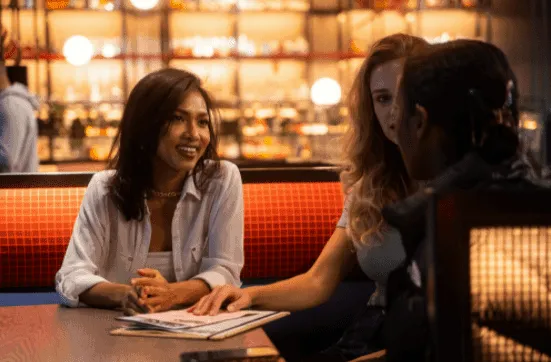
Group bookings are another commercial advantage. Competitive socialising venues attract hen parties, corporate team days, birthday groups, and family outings, all of which tend to book in advance, spend more per head, and fill the venue during peak periods more reliably than walk-in trade.
Where is competitive socialising popular?
While this new breed of competitive socialising has emerged in London, UK, it is now spreading to smaller cities and towns across the UK, Ireland and further afield. A 2021 KAM Media survey said 48% of Londoners were aware of the term 'competitive socialising', compared to just 13% in Scotland and 15% in East Anglia.
What kinds of venues host competitive socialising activities?
Competitive socialising venues vary significantly in scale and format. At the smaller end, independent bars and pubs have incorporated activities such as darts, shuffleboard, ping pong, and arcade games into their existing offering without a full concept overhaul.
At the larger end, entrepreneurs have taken on former retail units, warehouses, and entertainment arenas to build dedicated competitive socialising destinations. These venues typically combine multiple activities with a full food and beverage operation, often with a distinct brand identity and aesthetic designed to drive social sharing.
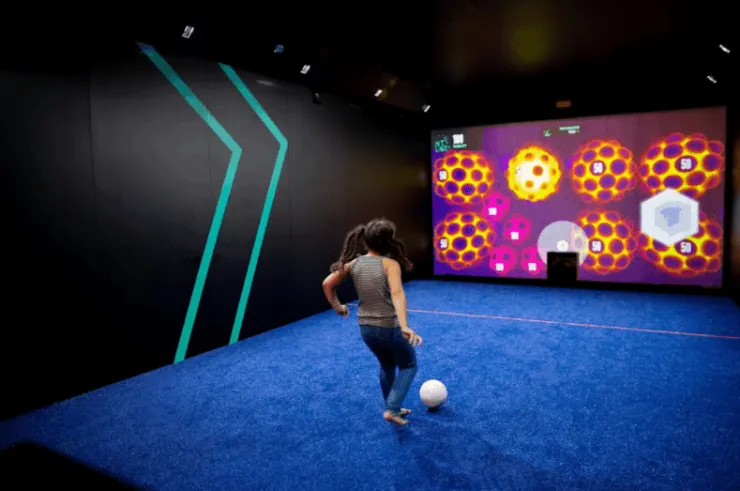
Flipdish client TOCA Social, based at The O2 in London, is one of the most prominent examples in the UK. The venue combines interactive football gaming with a dining experience designed by a Michelin-trained chef, serving food across multiple areas of the venue including a dedicated dessert room.
Competitive socialising also has a growing virtual dimension, with digital and online experiences extending the format beyond physical venues.
What competitive socialising activities are popular?
Popular activities include:
- Interactive football
- Crazy golf
- Bowling
- Axe throwing
- Escape rooms
- Bingo
- Pool and snooker
- Darts
- Board games
- Arcade games
- Table football
- Padel
However, this is by no means a definitive list, as new trends are constantly emerging.

What demographics enjoy competitive socialising most?
As mentioned earlier, competitive socialising appeals to multiple demographics, from Gen Z to retirees. KAM Media provided the following stats in their recent competitive socialising report:
41% of Gen Z have been before and 47% would like to go the future
29% of millenials have been before and 60% would like to go in the future
16% of 45+ have been before, and 55% would like to go in the future
22% of people with no kids have been before, and 56% would like to go in the future
33% of those with kids in the household have been before, and 58% would like to go in the future
17% of teetotaler have been before before and 44% would like to go in the future
How technology improves the competitive socialising experience
The core operational challenge in competitive socialising is getting food and drinks to customers without interrupting their experience. Customers mid-game do not want to queue at a bar or leave their station to order. The venues that handle this best use ordering technology that brings the transaction to the customer.
QR code ordering allows customers to browse the menu, place an order, and pay from their phone without leaving their activity. Orders are sent directly to the kitchen and delivered to the customer's station or booth. This removes friction from the ordering process, increases the frequency of orders per visit, and directly improves food and beverage revenue.
As Stephen Plumer, Director of Marketing at TOCA Social, puts it: "We are excited to work with Flipdish to make our food and beverage sales a lot easier. With a competitive socialising experience, people are in the box playing games and it is not always easy to order. Taking that pain point away using Flipdish will hopefully increase our food and beverage revenue and make ordering as easy as possible for our guests."
Augmented reality is an emerging technology in this space, with venues beginning to explore how AR can enhance the in-venue experience while keeping the social element central.
Food and drink in competitive socialising venues
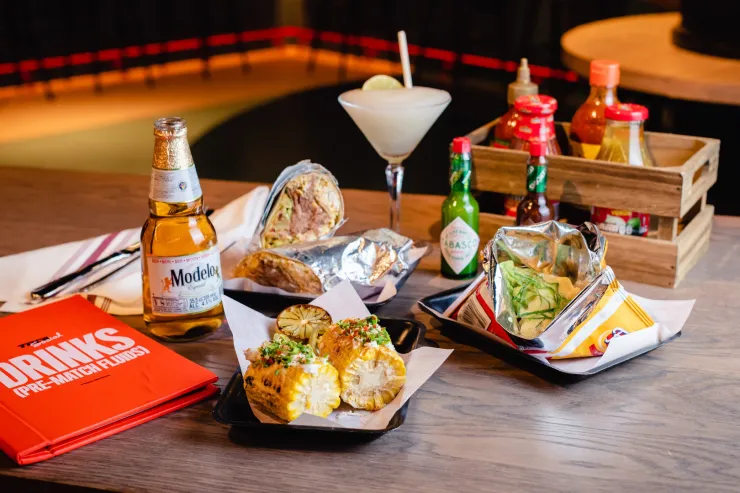
Food and drink has become a genuine differentiator in competitive socialising. In the early days of the format, venues could succeed on the strength of the activity alone. As the market has matured and competition has grown, the quality of the food and beverage offering has become increasingly important to attracting and retaining customers.
Street food, small plates, and sharing formats work well because they fit naturally into a social, active environment. Themed menus tied to the activity add to the overall experience. Cocktail lists, craft beer selections, and non-alcoholic options that match the overall quality and creativity of the food are now expected at the upper end of the market.
Venues that treat food and drink as an afterthought are losing ground to those that have invested in it as a core part of the concept.
How to ensure a memorable competitive socialising experience
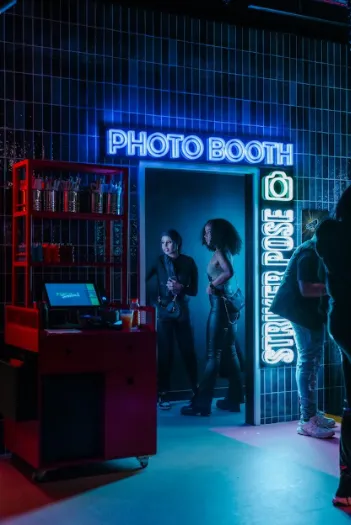
As seen from the list of popular activities, having a unique one isn’t the most important thing. However, for experience seeking Millenials and Gen Zers, good design prompts them to share memories on their social channels, making them effective co-marketers. Offering a seamless digital customer experience is also key. Choose a QR Code Order & Pay system that allows for ordering, paying and tipping in one, and let your customers get back to the fun, pronto.
Stephen Plumer of TOCA Social believes dining enhancements are key. “I see competitive socialising venues continuing to improve their food and beverage offering. Challenging your traditional restaurants and bars, beyond their games offering. Food and drink is getting increasingly important. Previously you could have been able to get away with a more average offering, if you could offer a unique experience. But with more and more emerging experiences, food and drink is becoming an increasingly important differentiator.”
Conclusion on competitive socialising
Traditional activities like pool, board games and darts may almost be background noise in your business, but they can be a real draw for people. Advertise your offering through your owned channels, and implement digital ordering so intitutitive that there is no distraction. And as entrepreneurs continue to make creative use of spaces, we’re anticipating lots more competitive socialising venues in the near future, with top-class food and beverage options, all powered by world-leading digital ordering systems.
FAQs
Competitive socialising is a hospitality format that combines a game or activity with food and drink in the same venue. It ranges from pubs with pool tables and darts to purpose-built immersive venues offering interactive experiences alongside premium food and drink.
Competitive socialising has its strongest presence in the UK, particularly London, where the format originated and has the highest concentration of venues. It is now growing across major UK and Irish cities and is expanding internationally, with venues opening across Europe and North America.
QR code ordering is widely used to allow customers to order food and drinks without leaving their activity. This removes friction, increases order frequency, and improves food and beverage revenue. Some venues are also beginning to integrate augmented reality into their activity experiences.