

Fitting out a restaurant kitchen means investing in reliable, commercial-grade equipment built to withstand heavy daily use. The essentials fall into a few core categories: refrigeration and storage, cooking equipment such as ranges, ovens, fryers and grills, food preparation tools, warewashing, and ventilation. Choosing durable equipment suited to your menu and volume saves money over time and keeps your kitchen running efficiently.
One of the biggest decisions when opening or upgrading a restaurant is the kitchen equipment. The right setup lets your team produce consistent, high-quality food efficiently, service after service, while the wrong equipment slows everything down and costs you money in repairs and waste.
Commercial kitchen equipment is built to handle the heavy, continuous use of a professional kitchen, which is why it is a significant but worthwhile investment. This guide walks through the essential equipment every restaurant should consider, organised by category, so you can plan a kitchen that suits your menu and your volume.
Essential restaurant kitchen equipment
From fish and chip shops to kebab houses to pizza delivery restaurants, you need the right tools in your arsenal to produce delicious meals in an efficient way. But you want to be sure your investment in restaurant kitchen equipment pays off over time. That means investing in the right commercial kitchen equipment that will stand the test of time in a busy kitchen.
Let's take a look at some of the most essential pieces of restaurant kitchen equipment.
Refrigeration units
First and foremost, it's important to have a reliable refrigerator and freezer. These appliances are crucial for storing ingredients and keeping them fresh. Commercial refrigerators and freezers are designed to handle the heavy use and constant opening and closing that occurs in a busy kitchen. It's also a good idea to have a separate prep fridge for ingredients that need to be kept at a different temperature, such as meat and dairy products.
Kitchen range
Another essential piece of kitchen equipment is a range or stove. A commercial range or stove is designed to handle the high heat and heavy use of a busy kitchen. It's important to have a reliable and efficient stove or range in order to cook dishes quickly and consistently. Gas ranges are popular because they heat up quickly, but electric ranges could be a more appropriate option for more controlled cooking.
Convection ovens
A commercial oven is also an important piece of equipment for any restaurant kitchen. A good oven will allow you to bake, roast and broil dishes quickly and consistently.
Commercial convection ovens, which use a fan to circulate heat, are a great option for a busy kitchen as they allow food to cook more quickly and evenly.
Commercial pizza ovens
Pizzas are a super popular takeaway option with the potential for great margins. But you need some specialist kit to produce a restaurant-quality pizza. Commercial pizza ovens are capable of reaching much higher temperatures in the 400-500℃ range, while domestic ovens tend to max out at around 250℃.
Whether they are made from brick or stainless steel and powered by gas, electricity or burning wood, commercial pizza ovens are essential for serious pizza restaurants to achieve a puffy, charred crust, crisp base and molten middle.
Deep-fat fryers
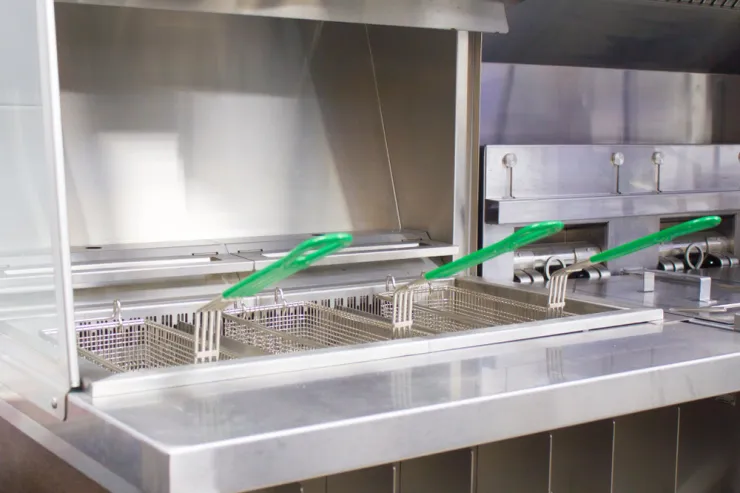
Fries, battered fish, onion rings and more. A commercial fryer is essential, especially in quick service restaurants, to quickly cook items for a moist interior and crisp outer shell. Make sure to choose heavy-duty fryers that can handle the constant high-temperature cooking required in a busy restaurant kitchen.
Grill
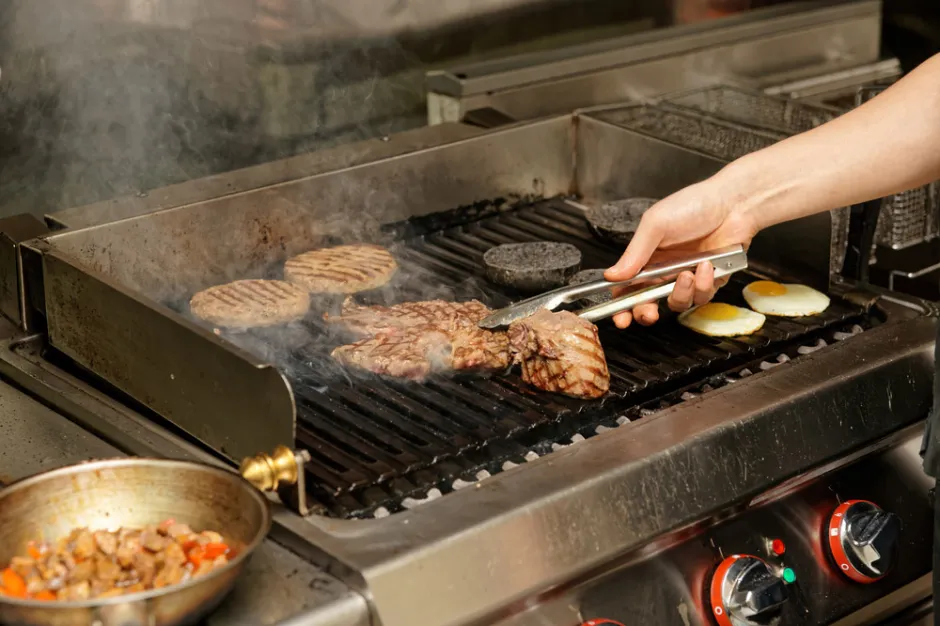
A good quality commercial grill is also an important piece of equipment for a restaurant kitchen. A grill allows you to cook meat, fish and vegetables quickly and efficiently. A flat-top grill is a popular option as it allows you to cook a variety of dishes at the same time.
A commercial charcoal grill, or even a wood-fired grill, can also add a unique flavour to dishes and is essential for certain cuisines.
Heavy-duty mixer
A commercial mixer is also an essential piece of equipment for any restaurant kitchen. A mixer allows you to mix, knead and blend ingredients quickly and easily. A stand mixer with a variety of attachments, such as a dough hook and a whisk, is a great option for a busy kitchen.
Commercial potato chipper
Takeaways that get through a truckload of chips every night might consider investing in a commercial potato chipper. These automated potato slicers can produce whatever size, shape and texture of chips you need. And you’ll save on ingredients costs in the long run not having to buy pre-cut potatoes from a third-party supplier.
Knives, utensils and cutting boards
It's important to have a variety of small kitchen equipment, such as cutting boards, knives, pots and pans, baking sheets and utensils. These items are used every day in a restaurant kitchen and it's important to have high-quality, durable equipment that can withstand heavy use.
Colour-coded cutting boards are used to keep different types of foods – like raw and cooked meat, vegetables and dairy products – separate to prevent cross-contamination.
Food preparation surfaces and tables
Stainless steel prep tables are the workhorses of any commercial kitchen. Durable, hygienic, and easy to clean, they give your team the space to prepare ingredients efficiently and safely. Look for sturdy, food-grade stainless steel that can withstand constant use and frequent cleaning, and consider tables with under-shelves to make the most of your floor space.
Warewashing and dishwashers
A commercial dishwasher is essential for keeping up with the volume of plates, utensils, and cookware a busy kitchen generates. Unlike domestic models, commercial warewashers run much faster cycles, often in just a few minutes, so your team always has clean equipment to hand. A dedicated dishwashing area with a pre-rinse station keeps the whole operation hygienic and efficient.
Shelving and storage
Proper storage keeps your kitchen organised, safe, and compliant with food hygiene standards. Commercial shelving, ideally stainless steel or food-grade and adjustable, keeps ingredients and equipment off the floor and correctly separated. Good storage planning reduces waste, speeds up service, and makes stock control far easier.
Ventilation and extraction
A commercial extraction and ventilation system is both a safety requirement and an operational necessity. It removes heat, smoke, grease, and cooking odours, keeping the kitchen safe and comfortable for staff and helping you meet health and safety regulations. Ventilation is not optional, so factor it into your kitchen plan and budget from the start.
Kitchen technology
Modern kitchens increasingly rely on technology as much as cooking equipment. A kitchen display system replaces paper tickets with digital screens that show incoming orders, prioritise them, and route them to the right station. Connected to your POS system, it keeps orders from every channel, including dine-in, collection, delivery, and self-service, organised in one place, which becomes essential as soon as your kitchen is handling more than one order stream.
Invest in the right restaurant kitchen equipment for more efficient food production
Having the right equipment in your restaurant kitchen is essential for running a successful restaurant. A reliable refrigerator and freezer, range or stove, oven, grill, mixer and small kitchen equipment are all important for preparing and cooking dishes quickly and consistently.
While it can be a significant up-front cost, investing in the right kitchen equipment will ultimately save you time and money. By keeping this in mind and doing your research, you can select the kitchen equipment that best suits your restaurant's needs.
Frequently asked questions
The essential categories are refrigeration and storage, cooking equipment (range, ovens, fryers, grills), food preparation surfaces, warewashing, shelving, and ventilation. The exact mix depends on your menu. A pizza restaurant needs a commercial pizza oven, for example, while a chip shop prioritises fryers. Most kitchens also now use technology such as a kitchen display system to manage orders.
Costs vary widely based on the size of your kitchen, your menu, and whether you buy new or used equipment. Commercial equipment is a significant upfront investment, but durable, well-chosen equipment saves money over time through reliability, efficiency, and lower repair costs. Planning your equipment around your actual menu avoids overspending on things you will not use.
Commercial equipment is built for heavy, continuous use and higher output. Commercial ovens, fryers, and refrigerators are designed to run all day, reach higher temperatures, and withstand constant opening, closing, and cleaning. Domestic equipment is not built for this workload and will wear out quickly in a professional kitchen.
Both have merits. New equipment comes with warranties and the latest efficiency features, while used equipment lowers the upfront cost. For essential, heavy-use items like refrigeration and cooking equipment, reliability matters most, so many operators prioritise new or professionally refurbished units for those and buy used for lower-risk items.
A takeaway typically needs reliable refrigeration, the cooking equipment suited to its menu (fryers for a chip shop, a pizza oven for a pizzeria), food preparation surfaces, warewashing, and storage. Because takeaways run on order volume, kitchen technology such as a kitchen display system connected to your online ordering is also valuable for keeping orders organised.