
How to use Instagram to grow your restaurant business
Instagram has over two billion active users, and food is consistently one of the most searched and shared categories on the platform. For restaurant owners, that represents a massive opportunity - but only if you know how to use it properly.
This guide covers everything you need to grow your restaurant on Instagram: how to make your profile work harder, what content actually performs, how to use every feature available to you, and how to turn followers into paying customers.

Set up your Instagram profile for success
Before you post a single piece of content, your profile needs to be set up correctly. This is the first thing a potential customer sees when they land on your page, and it needs to do several jobs at once: tell them who you are, where you are, what you serve, and what to do next.
Switch to a business account. If you haven't already, convert to an Instagram Business account. This gives you access to Insights (analytics), the ability to run ads, contact buttons, and the food order sticker in Stories.
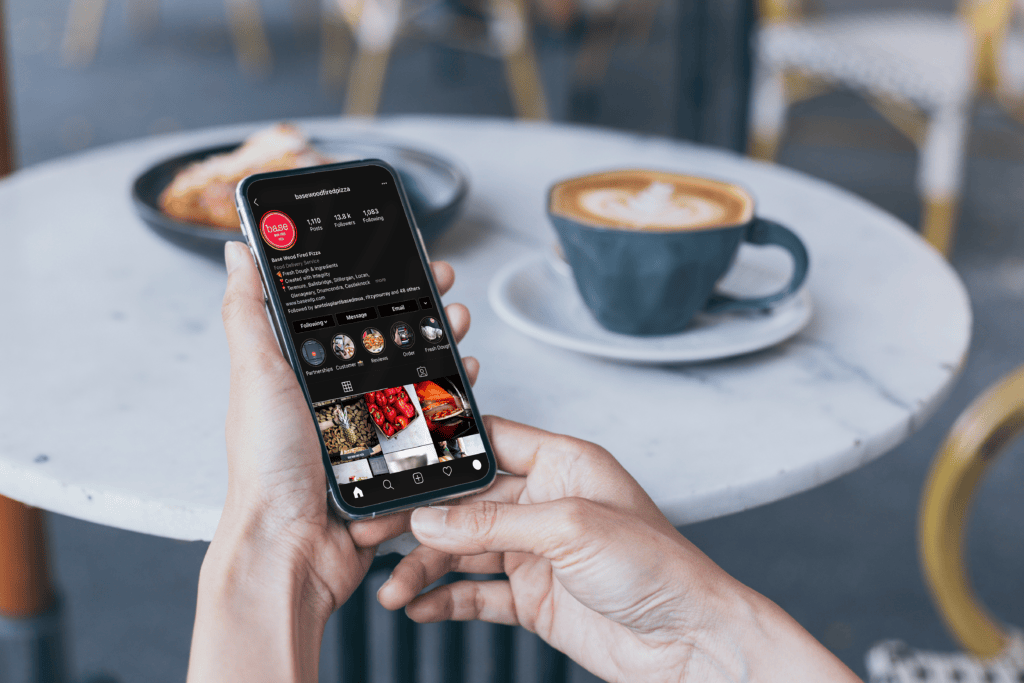
Write a keyword-rich bio. You have 150 characters. Use them to include your cuisine type, location, and a clear call to action. For example: "Dublin's favourite independent pizza restaurant. Order online via the link below."
Use your link strategically. Instagram only gives you one clickable link. Use a link-in-bio tool (like Linktree or Flipdish's direct ordering link) to send followers directly to your online ordering page. This is one of the most direct ways to convert Instagram traffic into revenue.
Choose a recognisable profile photo. Use your logo - consistently sized and centred. Avoid busy images that don't read well at small sizes.
Aesthetics: build a feed worth following
Your brand needs to stand out in order to be noticed, and the key to this on Instagram is visual consistency and image quality. There are hundreds of millions of posts uploaded every day - if you want to compete for attention, you need to invest in quality.
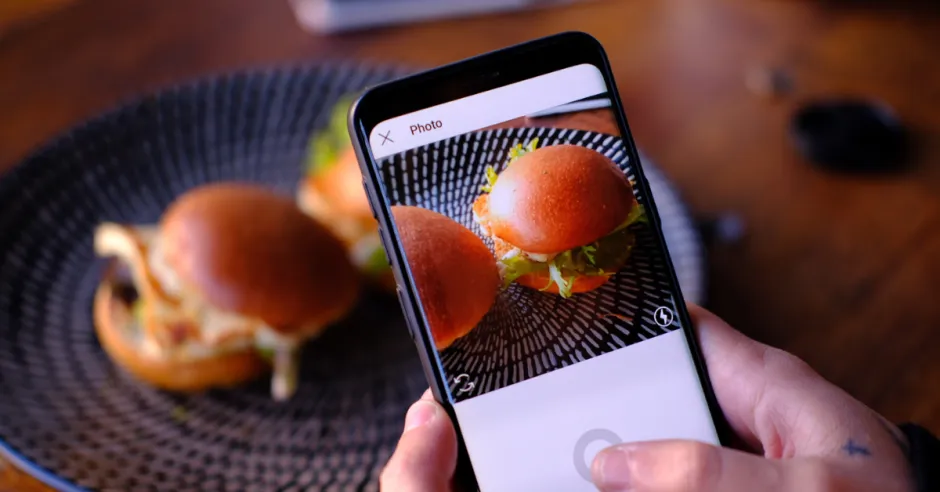
Invest in photography. Even a smartphone can produce excellent food photography with the right lighting. Natural light is your best friend. Avoid flash photography for food - it flattens texture and colour. If budget allows, even a single session with a professional food photographer can give you weeks of content.
Create a consistent visual theme. The most effective Instagram feeds have a consistent running theme - a colour palette, a shooting style, a consistent way of framing dishes. This doesn't need to be complicated. It could be as simple as always shooting on the same surface, always using the same filter, or always including a human element. Consistency signals professionalism and builds brand recognition over time.
Plan your grid in advance. Tools like Later or Planoly let you preview how your grid will look before you post. A well-planned grid looks intentional and curated, which builds trust with new visitors.
Content strategy: what to post and how often
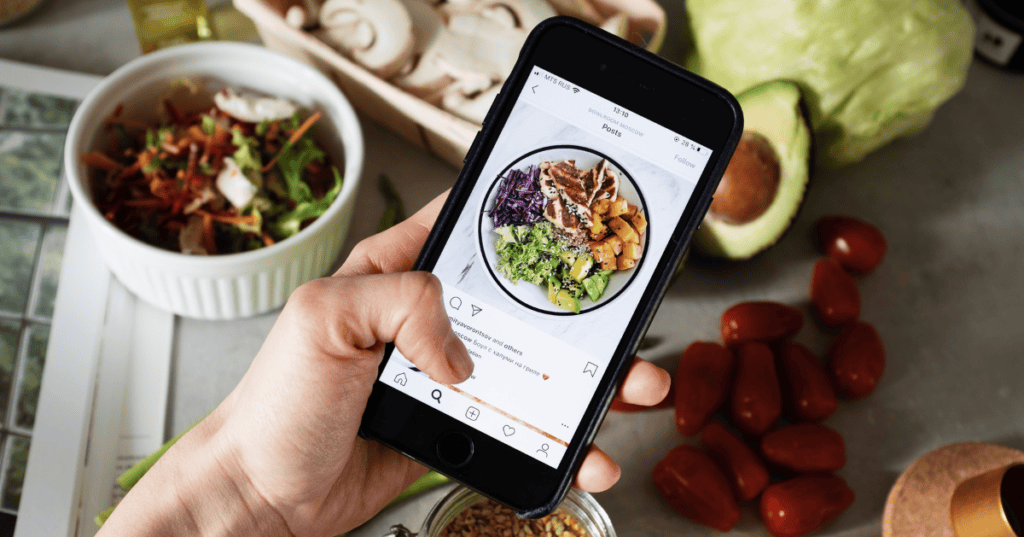
Knowing what to post is where most restaurant Instagram accounts stall. Here's a simple content mix to keep your feed varied and your audience engaged:
Food and drink (50-60% of posts). Hero shots of your best dishes, seasonal specials, new menu items, and behind-the-scenes prep. These are your bread and butter. Make them beautiful.
Behind the scenes (15-20%). Your kitchen team, prep work, deliveries arriving, staff stories. People connect with people. Showing the humans behind the food builds loyalty and trust in a way that polished product shots can't.
User-generated content (10-15%). Repost photos your customers take of their meals (always credit them). UGC is powerful social proof - a real customer photo is more persuasive than a professional one. Encourage it by creating a branded hashtag and asking customers to use it.
Promotions and CTAs (10-15%). Special offers, limited-time dishes, online ordering reminders, loyalty programme announcements. Keep these proportionally low -- if every post is a promotion, people tune out.
Posting frequency. Aim for 3-5 feed posts per week and daily Stories. Consistency matters more than volume - it's better to post three excellent photos a week than seven mediocre ones.
Hashtags: how to get discovered
Hashtags place your content into searchable categories. Used correctly, they extend your reach beyond your existing followers to new audiences actively looking for what you offer.
Use a mix of broad and specific hashtags. Broad hashtags like #foodie or #instafood have massive audiences but massive competition. Specific hashtags like #dublinrestaurants or #blackrockfood have smaller audiences but far less competition - and the people browsing them are much more likely to be your actual target customer.
Aim for 5-15 hashtags per post. Instagram allows up to 30 but research consistently shows diminishing returns beyond 15. Focus on quality and relevance over quantity.
Build a hashtag bank. Research your competitors and the accounts you admire. Note which hashtags appear on their most-engaged posts. Build a bank of 50-100 relevant hashtags across different sizes and rotate them rather than using the same set every time.
Create a branded hashtag. A unique hashtag for your restaurant (e.g. #YourRestaurantName) gives customers a way to tag their content and gives you an easy way to find and repost UGC.
Instagram Reels: the highest-reach format right now
If you're not using Reels, you're leaving significant reach on the table. Reels are Instagram's short-form video format, and the algorithm heavily prioritises them for distribution - meaning Reels regularly reach non-followers in a way that static posts rarely do.
What works for restaurants on Reels: time-lapses of dish preparation, recipe reveals, a day in the kitchen walkthroughs, before-and-after plating videos, staff introductions, and seasonal menu launches.
Keep them short. 15-30 seconds tends to outperform longer videos for restaurant content. Hook viewers in the first 2 seconds - lead with the most visually compelling moment, not a logo or title card.
Add captions. A large proportion of Instagram users watch video with sound off. Always add captions or on-screen text to make your Reels accessible and effective regardless of audio.
Use trending audio. Reels that use trending audio tracks get an additional boost from the algorithm. Check the Reels tab regularly and note which audio clips have the arrow icon, indicating they're trending.
Instagram Stories: drive engagement and direct orders
Instagram Stories disappear after 24 hours, which makes them perfect for time-sensitive content - daily specials, limited availability dishes, behind-the-scenes moments, and promotions. They also have a dedicated, habitual audience: many users check Stories before their main feed.
Use the food order sticker. This is one of the most underused tools for restaurant Instagram accounts. Place the food order sticker on your Story and customers can click directly through to your ordering page. If you're using Flipdish, your online ordering link goes directly here - turning a Story view into a direct order with one tap.
Use interactive stickers. Polls ("Which new dish should we add?"), question boxes ("What's your favourite thing on our menu?"), and countdowns ("New menu launches in...") all drive engagement and give you valuable customer insight.
Save key Stories as Highlights. Organise your best Stories into Highlights on your profile - Menu, Our Story, Reviews, Behind the Scenes. These live permanently on your profile and are often the first thing new visitors explore.
Use GIFs and stickers for visual energy. Movement catches the eye as users tap through Stories. A well-placed GIF can make the difference between a tap-through and a pause.
Instagram Insights: understand what's working
After all your posting and editing, the critical final step is understanding what is and isn't working. Instagram Insights gives you the data you need to refine your strategy over time.
Key metrics to track:
- Reach - how many unique accounts saw your post. This tells you how far your content is travelling beyond your existing followers.
- Impressions - total number of times your post was seen, including repeat views. A high impressions-to-reach ratio suggests your content is being revisited.
- Engagement rate - likes + comments + saves + shares divided by reach. For restaurants, 3-6% is a healthy benchmark.
- Saves - one of the most valuable signals. When someone saves your post, Instagram interprets it as highly valuable content and shows it to more people.
- Story views and exits - where in your Story sequence do people drop off? If viewers exit consistently on a particular slide, that content isn't landing.
- Best posting times - Insights shows you when your audience is most active. Post within this window for maximum early engagement, which in turn signals the algorithm to show your content to more people.
Set clear goals. Don't track everything - track what matters to your objectives. If your goal is growing your ordering customer base, track link-in-bio clicks and food order sticker taps above all else.
Instagram ads: amplify what's already working
Organic reach on Instagram has declined over the years. Paid promotion doesn't need to replace your organic strategy - but it can dramatically amplify it.
Boost high-performing posts. Rather than creating separate ad content, identify posts that are already performing well organically and put budget behind them. If an audience already engages with it for free, a paid audience will too.
Target by location and interest. Instagram's ad targeting allows you to reach people within a specific radius of your restaurant who have shown interest in food, dining out, and similar categories. This is highly cost-effective for local businesses.
Use Story ads for time-sensitive offers. Story ads are full-screen, immersive, and have a direct CTA button. They're ideal for promoting a weekend special, a new menu launch, or a limited-time discount linked directly to your ordering page.
FAQs
Research suggests 5-15 hashtags per post is the sweet spot. Focus on a mix of broad, medium, and hyper-local tags that are genuinely relevant to your content.
Check your own Insights - your audience data is more reliable than any general benchmark. That said, lunch hour (11am-1pm) and evenings (6pm-9pm) tend to perform well for restaurant content as people are thinking about food.
Use the link-in-bio to point directly to your online ordering page, use the food order sticker in Stories, and run Story promotions tied to specific offers. The goal is to reduce the number of steps between seeing your content and placing an order.

