
Restaurant upselling techniques: how to train your staff to increase check sizes
Upselling is the practice of encouraging customers to add to or upgrade their order in a way that improves their experience. Done well, it increases average check size, lifts staff tips, and makes customers happier rather than pressured. The most effective techniques include strong product knowledge, subtle suggestion rather than hard selling, personalised recommendations, and using POS and self-service technology to prompt add-ons automatically at the point of order.

Why upselling matters
Before training your team on technique, it helps to explain why upselling matters, because staff who understand the purpose do it more naturally. Upselling is not about pressuring customers into spending more. It is about improving their experience by suggesting items that genuinely complement their order. A customer who is guided toward a dish they end up loving leaves happier and more likely to return.
There is a direct benefit for your staff too. Larger checks typically mean larger tips, so your team has a personal stake in doing it well. When everyone understands that good upselling is a win for the customer, the staff member, and the business, it stops feeling like a chore and starts feeling like good service.
Restaurant upselling techniques that work
Build deep product knowledge
Confident upselling starts with knowing the menu inside out. Your staff should understand the ingredients, preparation methods, and standout qualities of every dish, along with which items pair well together. A server who can genuinely recommend the wine that suits a dish, or explain why a particular side works with a main, comes across as helpful rather than salesy. Regular menu tastings and short team briefings before service keep this knowledge fresh, especially when specials change.
Looking for ways to cut costs and increase profit for your Restaurant/Takeaway?
Access our "Cost-Cutting Strategies for Restaurants in 2026" eBook by filling the form below.

Keep it subtle, never pushy
The difference between a welcome suggestion and an annoying sales pitch is tone. Train your team to frame upsells as recommendations that enhance the meal, not as attempts to spend the customer's money. Instead of "do you want to add fries," a better version is "our rosemary fries go really well with that if you fancy a side." The first is transactional. The second feels like advice from someone who knows the food.
Personalise the recommendation
Generic upsells are easy to decline. Personalised ones land far better. Encourage staff to read the table and tailor suggestions to what the customer seems to want. A group celebrating might welcome a suggestion of a bottle to share. A customer ordering a spicy dish might appreciate a recommendation for a drink that balances the heat. When a suggestion feels made for them, customers are much more likely to say yes.
Suggest at the right moment
Timing matters as much as wording. The natural moments to upsell are when taking the initial order (sides, upgrades, drinks), when clearing mains (dessert, coffee, a digestif), and at the point of online checkout (add-ons and combos). Suggesting a dessert while the customer is still eating their main rarely works. Suggesting it as you clear the plates does.
Offer premium upgrades, not just extras
Upselling is not only about adding items. It is also about trading up. Offering a premium version of what the customer already wants, a better cut of steak, a large instead of a regular, a branded spirit instead of the house pour, often increases the check with a single easy yes. These upgrades feel like small indulgences rather than additional purchases.
Upselling examples for restaurants
Here are simple, natural upselling lines your team can adapt:
Pairing a side: "Those gourmet fries are a perfect match with the steak if you'd like to add a portion."
Trading up a drink: "Would you like to make that a large, it's only a little more."
Suggesting a starter: "The calamari is great for sharing while you wait for your mains."
Recommending dessert: "We've a warm chocolate fondant that's really popular, shall I bring the dessert menu over."
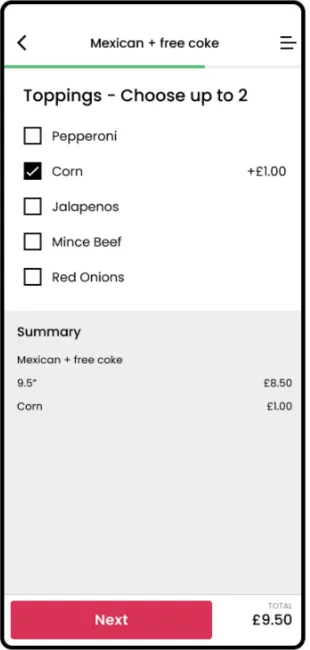
At online checkout: automated prompts offering a drink, a side, or a premium topping before the customer completes their order.
Let technology do the upselling for you
Not all upselling has to be manual. The right technology prompts add-ons automatically and consistently, without relying on a staff member to remember every time.
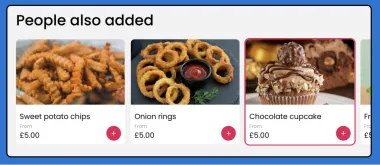
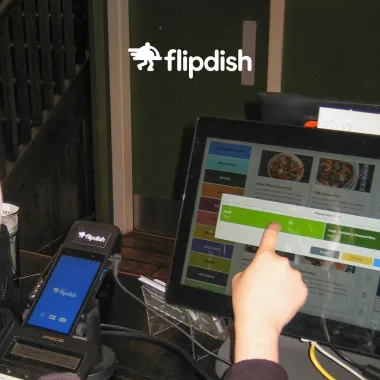
A POS system can prompt staff with relevant upsell suggestions as they take an order, making it easy to recommend higher-margin sides, drinks, or desserts at the right moment. Self-service kiosks are particularly effective, as customers ordering from a screen consistently spend more than those ordering at a counter, partly because the kiosk offers every relevant add-on without any social pressure. Your online ordering system and restaurant app can do the same, showing add-ons, upgrades, and combo deals before checkout.
The advantage of automated upselling is consistency. Every customer sees the same well-designed prompts every time, regardless of how busy the shift is or which staff member is serving them.
Reward and track your team
Upselling improves quickly when you measure it and recognise it. Create an incentive for staff who upsell well, whether that is a bonus, a gift card, or simple public recognition at a team meeting. Use your reporting and analytics to track which staff and which items perform best, then share what is working across the team. Data also tells you which upsells customers actually accept, so you can focus your team's energy on the suggestions most likely to land.
Frequently asked questions
Upselling in a restaurant is the practice of encouraging customers to add to or upgrade their order in a way that improves their experience. This might mean suggesting a side, recommending a premium version of a dish, or offering a dessert. Done well, it increases the check size while making the meal more enjoyable for the customer.
The most common way is suggestive selling by staff, such as recommending a side, starter, or drink that pairs well with what the customer has ordered. Another increasingly common method is automated upselling through self-service kiosks and online ordering, which prompt customers with relevant add-ons before they complete their order.
The most effective techniques are building strong product knowledge, keeping suggestions subtle rather than pushy, personalising recommendations to the customer, timing the suggestion well, and offering premium upgrades rather than only additional items. Combining well-trained staff with technology that prompts add-ons automatically produces the best results.
Upselling only annoys customers when it feels pushy or irrelevant. When a suggestion is genuinely helpful, well-timed, and tailored to what the customer wants, it improves the experience rather than detracting from it. Training staff to recommend rather than pressure is the key to getting this right.
POS systems can prompt staff with upsell suggestions at the point of order, while self-service kiosks and online ordering platforms automatically offer add-ons, upgrades, and combos to customers. Automated upselling is consistent, works on every order, and often increases average order value without any staff involvement.


